

Japan
Much of the glaze knowledge that made its way to New Zealand came via Bernard Leach's 'A Potter's Book', which focuses on raw materials and the inherent qualities of unrefined glaze material. Many villages in Japan continue the tradition of working with local materials.
In 2025, with support from Creative New Zealand, I travelled to Japan to trace the lineage of many New Zealand glaze materials. Volcanic areas rich in feldspars and tuffs have supplied potters for hundreds of years; however, these materials are now sourced from the recycling of stone buildings, many of which were destroyed in the 2016 Earthquakes.


Twice a year in spiing and Autumn the small town of Mashiko grows from 22,000 people to over 600,000 for the pottery fair. Potters from all over Japan come to sell their work over the six days. My aim was to arrive in Mashiko for the spring fair and seek out potters using rock glazes.

Voulume One Number One

Twice a year in spiing and Autumn the small town of Mashiko grows from 22,000 people to over 600,000 for the pottery fair. Potters from all over Japan come to sell their work over the six days. My aim was to arrive in Mashiko for the spring fair and seek out potters using rock glazes.
Hamada and Ashinuma Stone
This trip focused on deepening my understanding of my own materials; visiting Mashiko and learning about its history is something of a pilgrimage for many potters, even more so when the glazes bear such a striking resemblance to those here in Taranaki.
While there, I visited quarries, factories, museums, and academic institutions. These days, the materials are harvested from the remnants of buildings that succumbed to earthquake damage, whereas they were once made from the original quarry tailings. The rock is gathered, processed, and bagged in a very simple setting.
Visiting the Hamada Museum gave me an insight into just how long this relationship with a single rock has sustained the town, and a craft culture that is still thriving.


Kamo River Stone
Kyoto and the Kamo River feature in Bernard Leach's "A Potter's Book". It is also the home of Kawai Kanjirō and the Raku Museum.
I had one day in Kyoto, and "Kamogawa ishi" presented itself to me in the most beautiful way. Many museums have a no-photography policy, so when seeing the rock on display, I asked the staff if they would make an exception.
One woman ran off in one direction while the other said, "Just wait." When she returned, she was carrying this rock from the private garden, complete with slaters and bugs; they even found me a sheet of white paper to photograph it on. "Please hurry before someone sees you," were her only instructions.
It was such a wonderful opportunity to hold this stone, its weight almost like pure iron, which is perhaps why it was prized for producing such a deep black glaze.
The Kamo River is central to life in Kyoto and comes alive in the evenings as people gather along its banks. It was a privilege to understand its relationship to ceramic history through first-hand experience.
Mashiko
Market
Most of my time in Japan was spent in Mashiko.
Made famous by Bernard Leach and Shoji Hamada, Mashiko has based its ceramic culture around Mingei (Folk Craft) and traditional pottery methods.
My interest in Mashiko lies in the local stone quarried in the area and used in glazing. The rock produces a glaze almost identical to Taranaki papa glazes. Hamada's work has played a significant role in shaping the New Zealand studio pottery movement.
Planning my stay around the Mashiko Pottery Market meant I could meet many local makers, identify those who use local materials, and learn more about their glazing practices.


Bearnard Leach

Oya stone and sand
Before I left for Japan, I made a selection of small bowls using New Zealand rock glazes. I anticipated that language would be a barrier, but I knew pottery was a universal language that the bowls carried.
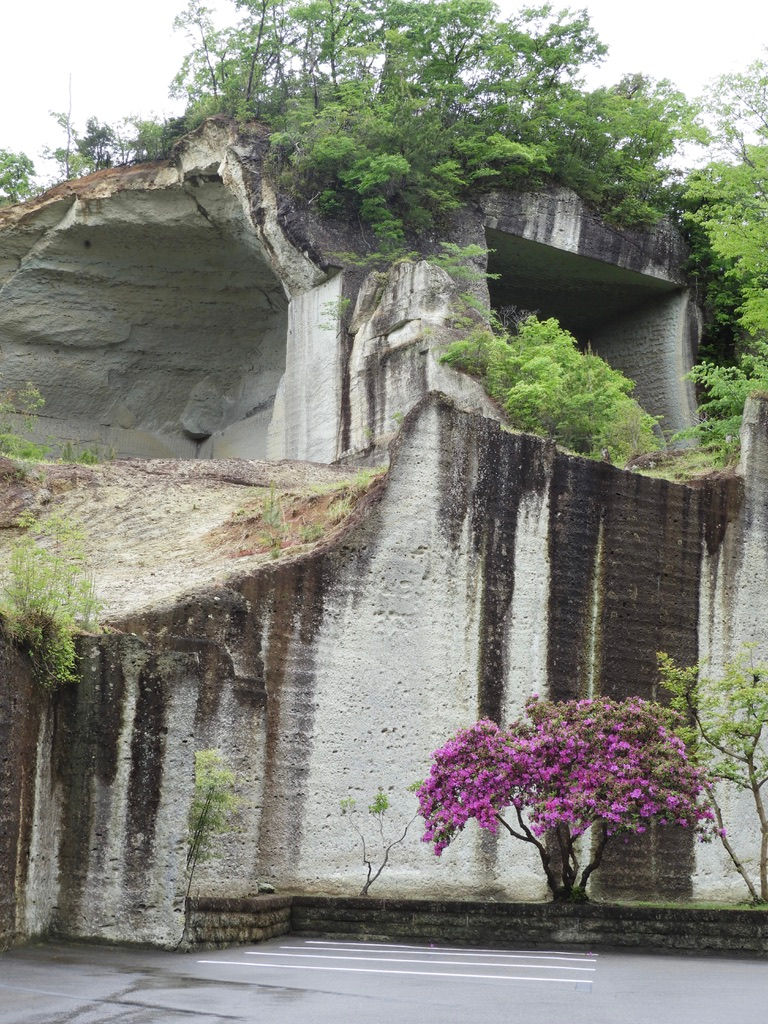
I was invited to meet Takaya Takeshita by his daughter-in-law, who knew he would be interested in the New Zealand glazes. He immediately recognised my Ongatiti glaze as very similar to one made from Oya stone, a building stone quarried in the nearby city of Utsunomiya.
Oya sand from near Mashiko is still tested by students at the Tochigi Prefectural Ceramics Research Institute as part of their studies, continuing the legacy of these local materials, which are remarkably similar to those I use here in New Zealand.

Kamo River Stone


Kamo River Stone